






Head to Head: 6.8 Western vs. .270 Winchester
I’ve more than a few requests for this one, as it seems that the 6.8 Western has not only rattled some cages, but might not be completely understood. And to start, let’s say first-off that the 6.8 Western is more than just a reboot of the .270 WSM that so many shooters flocked to a decade ago. This is, invariably, a matter of old school versus new school, but unlike so many attempts at revising a cartridge which was just fine to begin with, I feel the 6.8 Western formula offers something completely different.
Starting with the well-respected .270 Winchester—whose 100th birthday is coming up in just three years—we have the first of many cartridges based on the .30-03/.30-06 Springfield family. Winchester necked down the .30-03 case—measuring 2.54 inches as opposed to the ‘06s 2.494-inch case—to hold 0.277-inch bullets, and released the cartridge, with much fanfare, in the Winchester Model 54 bolt-action rifle. Despite the fact that iron sights were the popular aiming system a century ago, the flat trajectory of Winchester’s new cartridge was not lost on those hunters who spent their time on the open prairie and in the mountains in pursuit of game at longer ranges. Recoil was manageable, and I firmly believe that the speedy cartridge sparked the entire “velocity vs. bullet weight” argument, as famed gun writers Jack O’Connor and Elmer Keith adopted differing views, with O’Connor championing the .270 Winchester for the majority of his career. In modern factory loads, the .270 Winchester will drive 130-grain bullets to a muzzle velocity of 3160 fps, and the 150-grain bullets to 2850 fps.
- Buy All-American!
- Bring health and vitality back to your body with these non-transdermal patches
- Get your Vitamin B17 & Get 10% Off With Promo Code TIM
- How To Protect Yourself From 5G, EMF & RF Radiation - Use promo code TIM to save $$$
- The Very Best All-American Made Supplements On The Market
- Grab This Bucket Of Heirloom Seeds & Save with Promo Code TIM
- Here’s A Way You Can Stockpile Food For The Future
- Stockpile Your Ammo & Save $15 On Your First Order
- Preparing Also Means Detoxifying – Here’s One Simple Way To Detoxify
- The Very Best Chlorine Dioxide
- All-American, US Prime, High Choice Grass-Fed Beef with NO mRNA, hormones or antibiotics... ever!
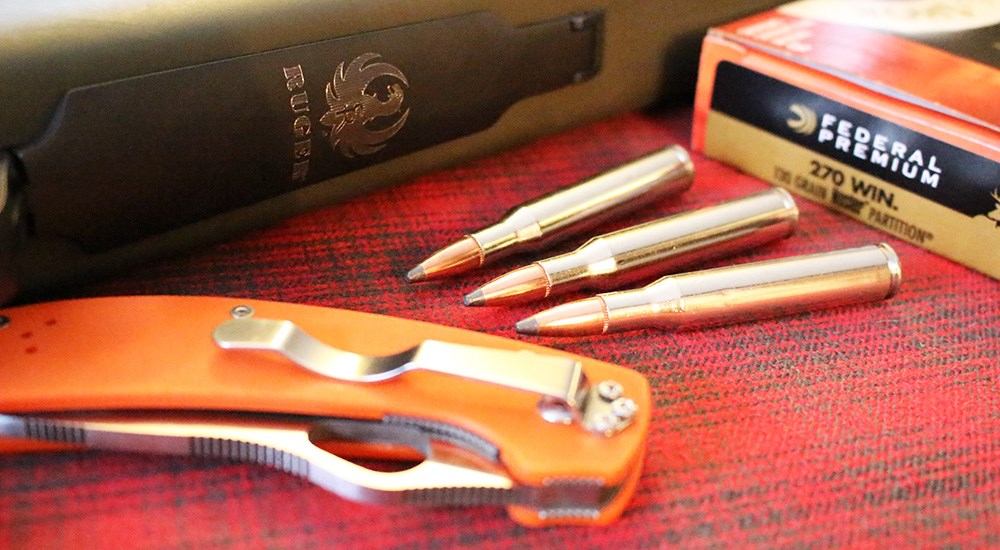
Deer hunters, elk hunters, antelope hunters, sheep hunters and more have relied on the .270 Winchester for nearly a century, and while it might not be as popular as the .30-06 Springfield, it isn’t far behind. It has been offered in nearly every type of rifle conceivable, has taken all sorts of game—I know a gentleman who took a bull elephant with a .270, due to some strange circumstances—and is as available as ammunition could be in these trying times. With an effective bullet range of 100 to 150 grains, the .270 Winchester has been widely embraced for nearly a century. But as a kid, when I began to go down the cartridge/bullet/ballistics rabbit hole, I never could figure out why the smaller 6.5mm bore diameter could use 156-grain bullets, but the .270 would top out at 150 grains, yet the 7mm bores could use 175-grain bullets; it didn’t make sense. As we’d find out, it was the twist rate. The .270 Winchester, the .270 Weatherby Magnum and .270 WSM all use a 1:10-inch twist rate, which won’t stabilize most bullets heavier than 150 grains.
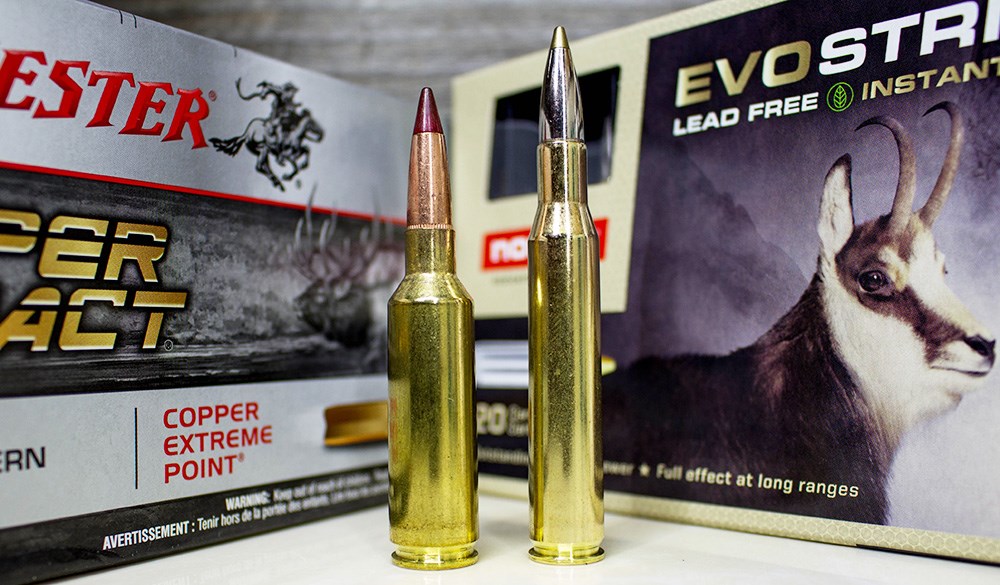
Enter the 6.8 Western, released at the end of 2020. While the concept of a .270 bullet driven at higher velocities had certainly been tried with both the .270 Weatherby Magnum (released 1945) and the .270 Winchester Short Magnum (released 2002), the bullet weight still topped out at 150 grains. Winchester and Browning collaborated to develop a new twist (pun fully intended) on the .270 theme, by using a 1:8-inch and 1:7.5-inch twist rate, respectively, in their rifles. They shortened the .270 WSM case, in order to facilitate the use of long, sleek bullets in a short-action magazine, and optimized the case to drive 165-, 170-, and 175-grain bullets at respectable velocities.
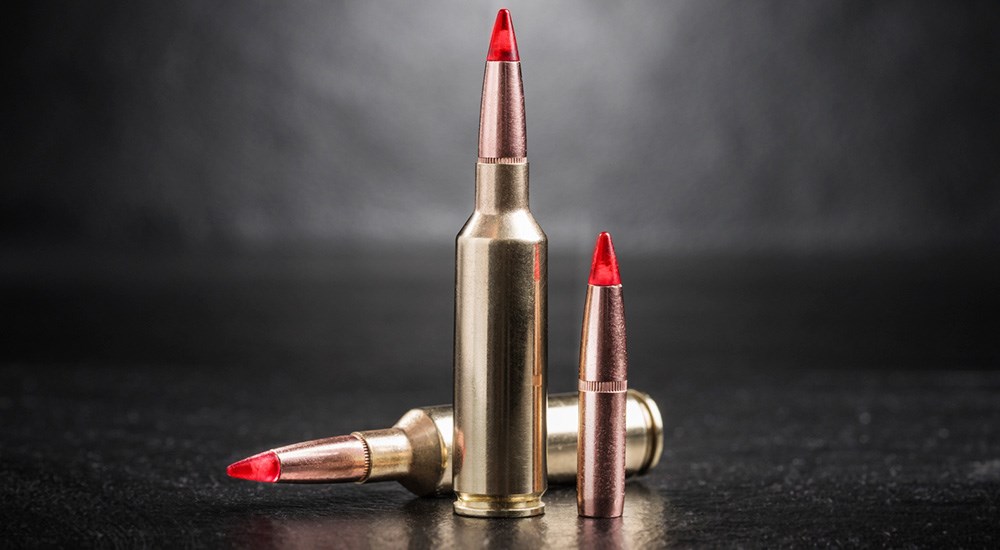
The Winchester 165-grain Nosler AccuBond load—leaving the muzzle at 2970 fps—has proven to be wonderfully accurate and hard hitting; in the fall of 2020 we took this on a combination mule deer/elk hunt in Colorado, and this load worked wonderfully at ranges from 25 yards to 450 yards. Browning’s 175-grain Sierra Tipped GameKing load was also accurate, and the increase in both sectional density (SD) and ballistic coefficient (BC) is eye opening. Essentially, what you’re getting with the 6.8 Western is performance on par with the .300 Winchester Magnum, with a significant reduction in recoil, in a light, short-action rifle. In fact, the 6.5 Western with a 165-grain bullet will have more energy than a .300 Winchester Magnum with a 180-grain bullet at 500 yards, by about 100 ft.-lbs. Where the 150-grain .277-inch-diameter bullet has a SD of 0.279, the 165-grain bumps up to 0.307, and that long 175-grain slug comes in at 0.326. This is a game changer for the .277-inch bore, giving it a definite advantage to those .270s which have come before.
Does the 6.8 Western have what to takes to get the nod? It does in my opinion. Before you start squeezing your phone or writing that hate mail, please be aware that I understand that the .270 Winchester isn’t going anywhere soon, and that if you are predominately a deer hunter, you may not see the shine of the 6.8 Western. But if you are a new hunter, or a young hunter in search of a rifle in this power/caliber range, I think the 6.8 Western checks all the boxes, and then some. It is a better cartridge for elk and moose, and I feel the additional Sectional Density makes a difference if you wanted to use a .270 on large black bears or interior grizzlies. The rifles I’ve spent time with have been wonderfully accurate, and walking the cartridge out to 500 yards at the range was a pleasure.
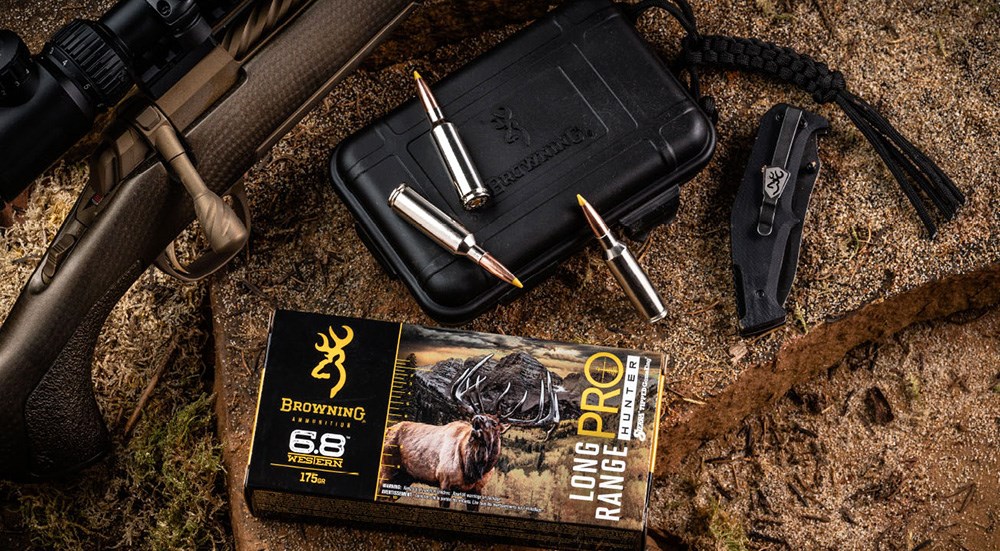
I can hear the “But I can’t find 6.8 Western at the backwoods stores…” Well, hell, I can’t find anything at the backwoods stores, and being completely honest, I’ve seen more 6.8 Western on gun shop shelves than I have .30-06 Springfield or .270 Winchester over the last couple of months. Quite obviously, the .270 Winchester is more popular than the newcomer, but if offered the choice of both cartridges to hunt with, I’d opt for the 6.8 Western. For the handloader, you can use the 130- to 150-grain bullets so common to the .270 Winchester if you prefer that style of bullet, and there is reliable load data for the 6.8 Western. Winchester offers four loads, including the new 162-grain Copper Impact lead-free bullet, and Browning has that 175-grain load aforementioned.
If you have a good .270 Winchester that you love, the 6.8 Western might not spark your desire to change horses, but I liked the new cartridge so much I sent Browning a check for the X-Bolt they sent for review instead of returning the rifle. I am a fan of flexibility when it comes to a cartridge, and I simply think the 6.8 Western has more appeal as an all-around big game cartridge in this bore diameter.
Article by PHILIP MASSARO